When German Precision Meets Pura Vida: Cross-Cultural Training for Manufacturing Operations in Costa Rica
German manufacturing operations in Costa Rica's free zones are built on a clear logic: world-class infrastructure, a stable political environment, a skilled and educated workforce, and tax incentives that make long-term investment attractive.
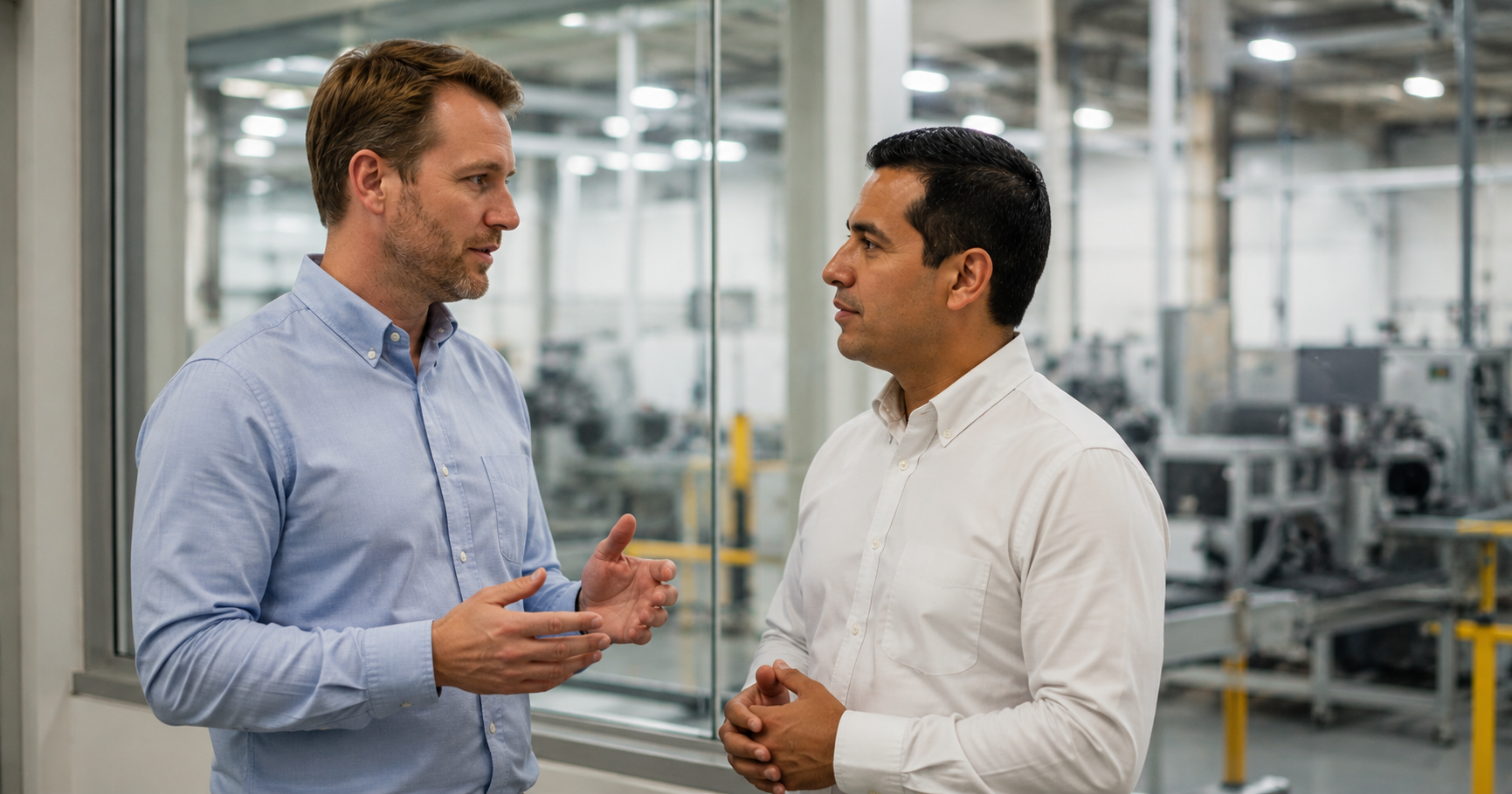
German manufacturing operations in Costa Rica's free zones are built on a clear logic: world-class infrastructure, a stable political environment, a skilled and educated workforce, and tax incentives that make long-term investment attractive. The business case is solid. What the business case does not prepare you for is the cultural distance between a production floor managed from Stuttgart or Munich and a team rooted in Costa Rican professional culture.
That distance is real, specific, and entirely manageable. But only if you name it first.
Two Cultures, Two Completely Different Defaults
The gap between German and Costa Rican professional culture is not about work ethic or capability. Both sides are serious, skilled, and motivated. The friction comes from deeply different assumptions about how work should be communicated, organized, and led.
German workplace culture, particularly in manufacturing and industrial contexts, is built around structure, directness, and explicit accountability. Schedules are commitments. Feedback is factual and delivered without softening. Disagreement is voiced openly because clarity matters more than comfort. Hierarchy exists but expertise is respected regardless of title.
Costa Rican professional culture operates on different but equally coherent logic. Relationships come before transactions. Harmony in the team is actively maintained, which means difficult feedback is softened or avoided to protect dignity. Agreement in a meeting does not always mean firm commitment. The concept of quedar bien, leaving an interaction on good terms, shapes how people communicate even when the underlying message is complicated.
Neither of these is wrong. Both of them, unexamined, create serious operational problems when they meet on a factory floor or in a project review.
What Goes Wrong Without Intercultural Training
In German-Costa Rican manufacturing environments, the same friction points appear repeatedly:
Feedback that shuts people down A German manager's direct, task-focused criticism, entirely normal within German professional norms, can land as personally disrespectful to a Costa Rican employee. The result is not open pushback. It is disengagement, reduced initiative, and quietly rising turnover.
Silence that reads as agreement Costa Rican professionals will often not voice objections in a group setting, especially to someone in a senior position. A German manager running a production review may leave the room believing there is alignment when the team has significant reservations they chose not to surface.
Urgency that erodes trust German operations culture prizes speed and precision on deadlines. Pushing hard on timelines without investing in the relationship first can be read by Costa Rican colleagues as aggression rather than professionalism. Trust, once damaged, is slow to rebuild in a high-context culture.
Costa Rican teams confused by German directness This dynamic runs in both directions. Costa Rican professionals working with German headquarters often find the communication style cold, blunt, and difficult to interpret emotionally. They may read directness as anger or disapproval when none was intended, and hesitate to escalate issues to HQ as a result.
What Intercultural Training Fixes
A well-designed intercultural workshop does not ask either side to abandon their cultural identity. It gives both sides a shared framework for understanding what the other side's behavior actually means, and practical tools for bridging the gap in daily operations.
For German-Costa Rican manufacturing teams, this includes:
1. Decoding communication styles in both directions German participants learn to read indirectness as information, not evasion. Costa Rican participants learn to interpret directness as efficiency, not hostility. Both sides practice recalibrating their natural defaults for the other context.
2. Feedback protocols that work across the gap Teams build shared norms for how feedback is given, received, and acted on. This is especially critical in quality-driven manufacturing environments where honest problem escalation is a safety and compliance issue, not just a management preference.
3. Meeting and decision-making structures Workshops establish explicit norms for how decisions get made, how concerns can be raised, and what agreement actually means in practice. This cuts the passive-compliance-followed-by-missed-target cycle that plagues intercultural production environments.
4. Relationship-building as an operational asset German managers often underestimate how much Costa Rican team performance depends on the quality of the personal relationship with leadership. Training reframes relationship investment not as a cultural indulgence but as a direct lever on output, retention, and team reliability.
When a German Executive Relocates to Lead a Costa Rican Operation
The most acute intercultural challenge in German manufacturing operations in Costa Rica is not the team. It is the newly arrived plant manager or operations director, handed responsibility for a local workforce they have never worked with, in a cultural context they were not trained for.
Our expat coaching and leader accompaniment service is designed specifically for this situation.
We work one-on-one with German executives in Costa Rica, helping them read what is actually happening in their team interactions, adapt their leadership style without losing their effectiveness, and build the credibility and trust with their local workforce that makes operations actually run.
This is not classroom training. We accompany leaders through real situations: the production review where nobody spoke up, the performance conversation that went sideways, the decision that was made but never implemented. We help the leader understand what happened culturally and what to do differently next time.
Coaching is available in German, Spanish, or English, and is typically structured across the first 90 days of a new assignment, when the patterns that will define the leadership tenure are being set.
When the Costa Rican Team Needs to Work Better with German HQ
The challenge also runs the other direction. Costa Rican managers and team leads who report to German headquarters often struggle with a communication culture that feels impersonal, opaque in its expectations, and unforgiving of the relationship-building time they consider essential.
Our workshops for locally-based teams address this directly: how to communicate proactively and concisely with German counterparts, how to flag problems upward in a way that matches HQ expectations, and how to build credibility with a headquarters culture that values data, directness, and punctual delivery.
Why Generic Intercultural Training Is Not Enough
Off-the-shelf "doing business in Latin America" content does not serve German manufacturing operations in Costa Rica. The context is too specific.
Costa Rica's free zone workforce is not a generic Latin American workforce. It is educated, internationally exposed, and increasingly experienced with multinational management cultures. The specific dynamics of a Costa Rican team working within a German-owned precision manufacturing or industrial operation require training that understands both sides in depth, not a general overview of cultural differences.
Our workshops are grounded in established frameworks including Hofstede's cultural dimensions and adapted specifically to the manufacturing and industrial sector context, in Spanish, German, or English depending on your team's composition.
What Our Services Look Like
Intercultural Workshops
Half-day sessions for leadership and management teams
Full-day workshops for cross-functional operational teams
Multi-session programs for new subsidiaries or teams undergoing cultural integration
Available in-person at your facility, virtual, or hybrid format
Facilitated in German, Spanish, English, or fully multilingual
Expat Coaching and Leader Accompaniment
One-on-one coaching for German executives managing Costa Rican teams
Accompaniment through real operational situations, not just theory
Structured across the first 90 days of a new leadership assignment
Available in German, Spanish, or English
Team Workshops for Costa Rican Staff Working with German HQ
Practical communication tools for reporting to and collaborating with German headquarters
Delivered in Spanish or bilingual format
Ready to Bridge the Gap?
German manufacturing operations in Costa Rica have every structural advantage. The workforce is capable. The infrastructure is world-class. What closes the gap between a good operation and a great one is cultural alignment, and that does not happen by accident.
[Contact us to schedule a discovery call] or [explore our workshop and coaching formats] to find the right fit for your operation.
We offer intercultural workshops, expat coaching, and leader accompaniment for German and European manufacturing companies operating in Costa Rica's free zones. Facilitation in German, Spanish, and English. Based in Costa Rica.
German operations in Costa Rica run better when both sides understand each other. We train and coach in German, Spanish, and English, on the floor, not just in the classroom.
Schedule a Discovery CallLi Grasse
Cross-cultural leadership coach and consultant